Physical Address
304 North Cardinal St.
Dorchester Center, MA 02124
Physical Address
304 North Cardinal St.
Dorchester Center, MA 02124

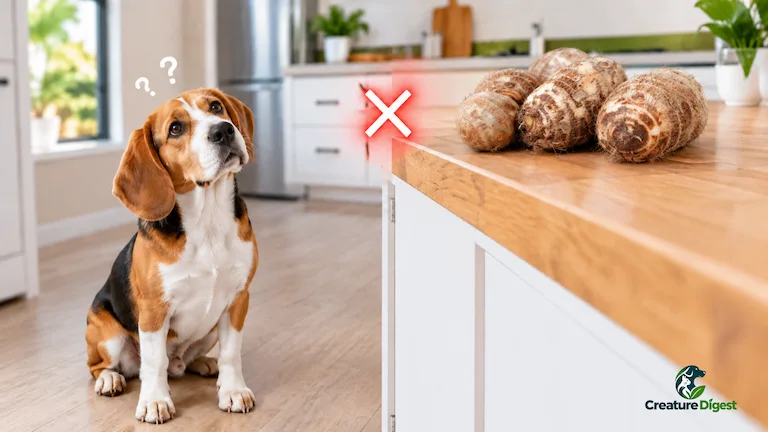
People always ask, can dogs eat taro? The short answer is absolutely not. Raw taro roots and leaves are highly toxic to pets. The plant is packed with thousands of tiny, sharp crystals. Just one bite forces these invisible needles straight into a dog’s gums. It causes instant mouth pain, rapid swelling, and awful stomach sickness.
You need to move fast if your dog chews on this plant. Grab some cool water or a little milk and gently rinse out their mouth. Doing this helps wash those sharp crystals away. After that, ring your vet or a pet poison control center right away.
The ASPCA Animal Poison Control Center warns about a hidden trap inside this plant. Taro contains tiny cell sacs called idioblasts. These sacs are packed with insoluble calcium oxalate crystals. They work just like microscopic needles. When a dog bites the raw root, their teeth break the sacs. Thousands of these invisible needles shoot directly into the gums, tongue, and throat.

Most dangerous foods, like chocolate, slowly poison a dog through the bloodstream. Taro acts differently. It physically cuts the mouth the exact second a dog takes a bite. It feels just like chewing on crushed glass. The plant also releases a special enzyme that causes a chemical burn. Because of this enzyme, every single tiny cut starts burning terribly.
Things get much worse if your dog actually swallows the chunks. The toxins hit the stomach and absorb right into the bloodstream. This makes the dog’s blood calcium levels drop dangerously fast. It also leads to calcium oxalate kidney stones. If those stones form, they can easily push the dog into sudden kidney failure.
Taro hurts the very second it touches the mouth. You won’t have to guess if your dog chewed on it. The poisoning happens in three main stages.
Dogs usually freak out the moment those tiny crystals cut inside their mouth. They might cry or whine really loudly. Watch for them pawing and rubbing their face to make the terrible burning stop.
They are also going to drool a ton. This is just the body trying to wash away the sharp needles. Take a peek inside their mouth right away. The lips, gums, and tongue can swell up super fast. If that swelling reaches the back of the throat, your pup might start gagging or choking.
If your dog actually swallows the plant, those tiny needles don’t stop working. They just keep slicing the throat, stomach, and intestines all the way down. Because swallowing hurts so badly, your pup will probably refuse to eat anything at all.
Next comes the really messy stomach sickness. Expect to see severe throwing up, and you might even spot some blood in it. They will also get bad diarrhea, and their belly will look super bloated and feel very sore to the touch.
This late stage usually only happens if your dog managed to eat a really big chunk of the plant. Small breeds and dogs that already have bad kidneys are in the most danger right now.
You will notice them getting super tired and extremely weak. Their muscles might even start shaking because the poison drops their blood calcium so fast. Also, keep a close eye on their bathroom habits. If they start peeing constantly, or suddenly stop peeing completely, it is a big warning sign that their kidneys are shutting down.
Is your dog chewing on raw taro right now? You have to move fast. Do these five things immediately.
Grab the taro and throw it out of reach. Are there still pieces in your dog’s mouth? Try to gently scoop them out with your finger. Just watch out. Hurting dogs get scared, and they might bite you by accident.
Lots of owners try to make their dogs vomit when they eat bad stuff. Do not do this here. Taro is full of tiny needles. If your dog throws up, those crystals come right back up. It will just slice their throat a second time.
Make your dog drink something fast. Liquid washes the crystals away. Let them gulp down all the cool water they want. A little milk or plain yogurt is great too. Milk has calcium. That calcium grabs the sharp needles and cools the burning fast.
Choking is the main thing to worry about. If your dog’s tongue or throat puffs up, they won’t be able to breathe at all. Rush to a vet clinic if you hear loud wheezing, heavy gasping, or see blue gums.
Ring your vet even if your dog looks completely normal. You can also call the ASPCA Animal Poison Control Center at (888) 426-4435. They will ask a few fast questions. Tell them your dog’s weight, the exact part of the plant they ate, and what time they ate it.
A lot of websites claim that boiling taro makes it perfectly safe for dogs, but that is actually a really dangerous myth. While cooking does break down some of those sharp crystals so humans can eat it, it doesn’t destroy all of them. A dog’s body is much smaller than ours, so those leftover trace toxins can still seriously damage their kidneys over time.
Besides the hidden toxins, taro is just too packed with heavy starches. Dogs don’t have the right enzymes in their spit to break down this kind of heavy food. Because they can’t digest it properly, feeding your dog cooked taro almost always leads to terrible gas, painful stomach cramps, and severe diarrhea.
Finally, this root is loaded with way too many calories. Feeding it to your dog will make them pack on weight fast, which easily triggers a super painful stomach sickness called pancreatitis. Please don’t trust the blogs calling cooked taro a safe treat, because the health risks are just not worth it.
People eat taro in a lot of fun ways, but you shouldn’t share these snacks with your dog.
| Taro Food | Risk to Dogs | Why It Hurts Them |
| Raw Taro or Leaves | Extreme | Tiny sharp crystals will instantly cut your dog’s mouth and throat. |
| Taro Bubble Tea | High | It’s full of sugar and milk. Plus, the black tea has caffeine, which poisons dogs. |
| Taro Ice Cream | High | Way too much sugar and dairy. It can also hide Xylitol, a fake sugar that kills dogs. |
| Fried Taro Chips | Moderate | These are way too salty and greasy. The oil and salt will make your dog sick and hurt their pancreas. |
| Plain Boiled Taro | Moderate | Boiling removes some crystals, but the heavy starch still gives dogs a really bad stomach ache and diarrhea. |
You might wonder why a dog can safely eat a potato but gets terribly sick from taro. It really just comes down to the specific plant family they belong to.
The biggest threat here is the calcium oxalates. Because of these tiny crystals, this root is never safe for a dog to eat raw. Even if you try cooking it, the plant remains highly unsafe and should always stay off your dog’s menu.
The hidden danger in a white potato is a chemical called solanine. This is why raw potatoes are toxic for your pup. However, if you peel the skin, boil them, and serve them totally plain, white potatoes suddenly become very safe and easy for dogs to digest.
Sweet potatoes don’t have any of those nasty root toxins. Actually, they are probably the absolute best root vegetable you can share with your dog. Once you cook them, they are perfectly safe, loaded with healthy fiber, and really great for your dog’s stomach.
Skip the taro if you want to give your dog a healthy crunch. Try these safe root veggies instead. Just make sure to serve them completely plain—no salt, butter, garlic, or onions allowed.
Wash, peel, chop, and boil them until they get soft. These are fantastic for keeping your dog’s digestion on track.
You don’t even need to cook these. Raw carrots help clean your dog’s teeth while giving them a nice vitamin boost.
Just steam or boil these first to make them soft. They are super gentle on a sensitive dog stomach.
Boil and mash these up to give your pup some extra calcium. You can just stir a little spoonful right into their regular food.
Cooked beets really help support a healthy immune system. One quick warning, though: beets turn dog poop bright red. Don’t panic, it isn’t blood!
It surprises a lot of dog owners to learn there are actually two totally different plants called “taro.” You have True Taro, or Elephant Ear (Colocasia esculenta), which is the outdoor crop people grow for its root. Then you have the Taro Vine. You probably know this one as Pothos or Devil’s Ivy (Epipremnum aureum), a super common indoor houseplant.

Even though they look completely different, they are closely related and belong to the same plant family. This means both plants use those nasty calcium oxalate crystals to protect themselves from being eaten.
So, if your dog chews on a Pothos leaf in your living room, they get poisoned the same way as eating a raw taro root. They will suffer those painful mouth cuts and severe swelling. If you keep Pothos inside your home, make sure to hang the pots high up near the ceiling entirely out of your dog’s reach.
Yes, though it doesn’t happen often. The real threat here is choking. If the plant causes your dog’s throat to swell shut, they won’t be able to breathe. Also, eating a huge chunk can overwhelm their kidneys and lead to sudden failure.
Honestly, any amount. Even a tiny lick or nibble shoots those microscopic needles straight into the gums. There really isn’t a safe dose. Just a single bite causes instant pain and swelling.
Give them a little bit of milk or cool water immediately. The liquid helps wash the sharp crystals away. Keep a close eye on their lips and tongue for the next couple of hours to check for swelling, and call your vet just in case.
No, it isn’t. Boiling does remove some of the danger, but trace oxalates always stay behind. Plus, taro is loaded with heavy starches. Feeding this to your dog usually leads to terrible gas, stomach cramps, and bloat.
Yes. Taro is packed with calcium oxalate, which is the exact chemical responsible for most kidney stones in dogs. Keep taro, spinach, and rhubarb far away from any pup with a history of pee or kidney issues.
Taro is delicious for humans, but keep it far away from your dog. Give them safe snacks like carrots or sweet potatoes instead. For more safe food alternatives, explore our core resources on Pet Nutrition & Diet. If they do grab a bite of taro by accident, skip the internet remedies and just call your vet.
About the Authors: This article was written, deeply researched, and highly verified by the Creature Digest Research Team. We have carefully cross-checked every fact in this guide against trusted veterinary data and official animal poison control guidelines to make sure this information is 100% accurate, safe, and helpful for your dog.